Full-Stack Developer & Scientific Software Engineer @ Biocomputing Unit

We have a Full-Stack Developer & Scientific Software Engineer position open at the Biocomputing Unit. Get to know it in this post!
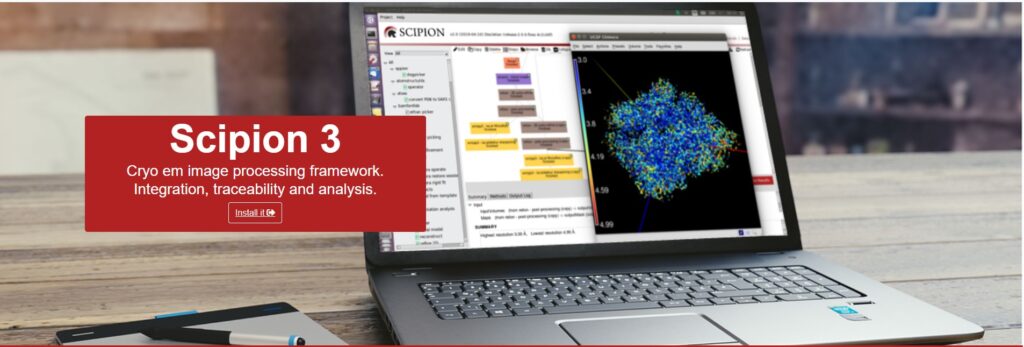
About Scipion: Scipion is an open-source, workflow-oriented software framework used primarily in Cryo-Electron Microscopy (cryoEM). It integrates various scientific software packages into a unified interface, allowing researchers to execute, track, and share complex image-processing pipelines. Its goal is to ensure reproducibility and provide a seamless experience for processing high-resolution biological data.

About ScipionWeb: ScipionWeb is the modern web-based evolution of this framework. It provides a platform to manage scientific projects and workflows: from project creation and protocol execution to high-level visualization and productivity tools.

Stack: React + TypeScript (Frontend) and FastAPI + Python (Backend).

Your Tasks & Evolution: In this role, your responsibilities will evolve as you gain mastery over the framework:

Short to Medium Term:

  • 50% Web Development: Full-stack development of the ScipionWeb interface (UI + API + Integration).
  • 50% Scipion Core & Domains: Diving into the backend logic, the Scipion core architecture, and specific scientific domains like SPA (Single Particle Analysis) and Tomography.

Medium to Long Term:

  • Focus on the Scipion Core and expansion into new scientific domains.
  • Maintain and update the ScipionWeb ecosystem to ensure long-term stability.

    Requirements

    Academic & Language

    • Degree: BSc/MSc in Physics, Mathematics, or Software Engineering.
    • English: B2 level or equivalent (ability to work in an international environment).

    Technical Essentials

    • Python: 2+ years of experience with Core Python (Standard Library).
    • Linux: Solid basic knowledge (Ubuntu is our preferred distribution).
    • Version Control: GitHub (PRs, collaborative workflows).
    • DevOps/Distribution: Experience with software distribution (PyPI, Conda) and CI/CD (GitHub Actions).

    Stack & Desired Skills

    The Tools We Use:

    • Frontend: React Router, React Query, MUI, ReactFlow (for diagrams).
    • Backend: FastAPI, Pydantic, service-oriented layers.
    • Integration: Async workflows (jobs/queues), schema-based forms, and data visualization.

    Bonus Points (Desired Skills):

    • Knowledge of Image Processing or cryoEM.
    • Experience with 3D visualization (three/react-three-fiber or vtk.js).
    • Experience with Docker and Celery.
    • A strong eye for API design and complex UI (editors, dashboards, large-scale data).

    What We Value

    We are looking for someone with a scientific mindset—someone who is not only a great coder but is also curious about how pipelines and HPC (High-Performance Computing) environments work. You should enjoy solving complex logic puzzles and building tools that help scientists discover the building blocks of life.

    Applying

    Are you interested in our Systems Manager job position? Send your CV and a letter of interest to blanca@cnb.csic.es.
    Systems Manager job position @ Biocomputing Unit

    We have a systems manager job position open at the Biocomputing Unit. Get to know it in this post!

    biocomputing unit server rack

    Description

    We are looking for a candidate with a background in Computer Science for the position of  Systems Management. You will be part of the team in charge of managing the computing infrastructure of the group, learning how public science development and compute infrastructures work. The tasks include assisting in the deployment and configuration of hardware and scientific software. Once here, you will also be participating in European and national projects related to cloud and open data technologies. The amount and heterogeneity of servers requires someone capable of thinking out of the box and exercise creativity to solve IT problems in complex scenarios.

    Location: in person, UAM campus, Madrid

    Background

    INSTRUCT ERIC is the European Strategic Initiative in the area of Structural Biology. It is organized as a distributed infrastructure with “Instruct Centers” and the BCU hosts the “INSTRUCT Image Processing Center (I2PC)”. The BCU is well known in the area of 3D-EM, with over 200 publications in the area and large contributions to open-source scientific software, like Scipion, Xmipp and 3DBionotes. For further information go to i2pc.es and biocomputingunit.es webpages.

    Required skills


        1. Upper cycle in Computer Science related matters (Spanish “FP superior”, BSc, MSc), Mathematics, Engineering, Physics or equivalent are also accepted.


              • (specialties or mentions related to systems and networks management such as Computer Engineering/Systems administration appreciated)

          1. Scripting and orchestrating experience: Bash and Python scripts, YAML (Ansible and similar)

          1. Experience and commodity in Linux environments (HPC environments is a plus)

          1. Interest and/or experience in computer hardware and computer networks

          1. Medium level of proficiency in written and spoken English

        Although not essential, we consider the following skills a “plus”:


            1. Experience in assisting open-source software development teams (GitHub, documentation, user support, collaboration tools…).

            1. Experience in Virtualization: Docker, Virtualbox

            1. Familiarity with the architecture and functioning of GPUs: NVIDIA CUDA, CUDA Toolkit, NVCC…

            1. Experience in Cloud (Amazon AWS)

          Applying

          Are you interested in our Systems Manager job position? Send your CV and a letter of interest to blanca@cnb.csic.es.

          2 Open Positions: Software Developer at Biocomputing Unit (BCU), Instruct Image Processing Center (I2PC), Madrid

          Description: We are looking for two candidates with a BSc/MSc in Computer Science, Mathematics, Engineering, Physics or equivalent with software development skills. The candidate will be involved in European and National projects related to cloud and open data technologies, being part of a team in charge of developing data management software for Instruct facilities.

          Thus, the candidate will participate in projects that will shape and influence strategies for making research data generated across the Instruct-ERIC infrastructure FAIR (Findable, Accessible, Interoperable, Reusable). This data transformation will involve considerations of the storage, metadata description and deposition of large datasets for use and reuse including artificial intelligence. These data will come primarily from structural biology but can include data from other diverse research domains.

          Background: INSTRUCT ERIC is the European Strategic Initiative in the area of Integrative Structural Biology. It is organized as a distributed infrastructure with “Instruct Centers” and the BCU hosts the “INSTRUCT Image Processing Center (I2PC)”.

           BCU is well known in the area of 3D-EM, with over 200 publications in the area of Electron Microscopy and large contributions to open source scientific software, like Scipion, Xmipp and 3DBionotes.

          For further information go to INSTRUCT Image Processing Center or  Biocomp web sites.

          Location: Madrid 

          Required Skills:

          • BSc / MSc in Computer Science, Mathematics, Engineering, Physics or equivalent
          • Programming experience with Python
          • Experience in Linux
          • Medium level of proficiency in written and spoken English

          The following skills are considered a “plus”, but are not essential:

          • Experience of the full lifecycle of software architecture, design, and implementation
          • Experience developing web and desktop Python apps
          • Knowledge and some degree of experience using relational and/or noSQL databases.
          • Experience in assisting open source software development teams (GitHub, documentation, user support, collaboration tools…).
          • Interest or experience in scientific data management
          • Interest or experience in biological sciences or bioinformatics
          • Experience in Virtualization: Docker

          Interested candidates should send their CV’s and letter of interest to blanca@cnb.csic.es

          New Position Open: CryoEM Image Processing Specialist

          Description: The Biocomputing Unit/Instruct Image Processing Center is looking for an image processing specialist with clear experience in the processing of cryoEM images from a variety of specimens and approaches, including Single Particle Analysis and/or Tomography. No method development experience is needed, but the candidate should be familiarized with different processing suites and also willing to keep exploring more approaches. A doctoral degree is expected, although it would not be essential considering similar practical experience

          The candidate will be immersed in a vibrant community in which top image processing developers sit side by side with application specialists addressing challenging international projects in the context of the Integrative Infrastructure for Structural Biology Instruct-ERIC

          Location: Madrid

          Required Skills:

          • Experience in cryoEM image processing.
          • Proficiency in different software packages and workflows for cryo-electron microscopy data analysis.
          • PhD degree in a related field (Structural Biology, Bioinformatics, Engineering, Physics, etc.) or equivalent practical experience demonstrating the required technical skills

          Interested candidates should send their CV’s and letter of interest to blanca@cnb.csic.es

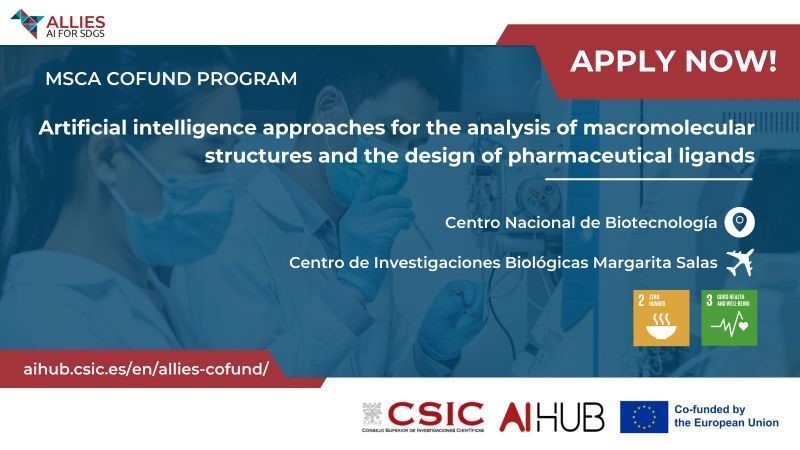
          Artificial intelligence for macromolecular analysis and pharmaceutical ligands design

          What we are looking for:
          We are looking for PhDs in engineering, physics, mathematics, computing science or any related scientific domain with a strong will to apply the AI methods to Structural Biology and Drug Screening. Knowledge of Python and Deep learning libraries are a must. Previous knowledge of Bioinformatics or Biology is highly appreciated, although not compulsory. The Postdoc must propose a research proposal aligned to the presented challenge.

          The context:
          Structural biology is key to understanding biological macromolecules like proteins and nucleic acids, crucial for biological functions and diseases. Cryo-electron microscopy (cryoEM) revolutionizes this field by visualizing macromolecules at near-atomic resolution, facilitating their study in native states. Simultaneously, computational prediction of ligand binding is vital for drug discovery, helping identify therapeutic candidates by how they interact with biomolecules. The synergy of AI tools for cryoEM and ligand prediction accelerates understanding biological systems and developing new treatments.

          The problem to address:
          The journey from pixelated snapshots to precise atomic models is fraught with computational hurdles, requiring a blend of innovative AI techniques and a deep understanding of molecular landscapes. Parallel to this endeavor is the quest to discover ligands that snugly fit into these newly revealed structures, a critical step in the design of new drugs. This challenge involves sifting through vast chemical libraries to find those rare molecules that can bind with high affinity to target sites on the macromolecule.

          Objectives:

          • Elucidating the complex structures of biological macromolecules from CryoEM images.
          • Discover ligands that fit into the structures revealed for new drug design.

          Expected Outcomes:

          • Robust algorithms and workflows to tackle both problems.

          Diseño estadístico de experimentos con animales

          Lugar: Centro Nacional de Biotecnología, C. Darwin, 3, Fuencarral-El Pardo, 28049 Madrid – Sala B.6

          Fecha: 11 de octubre de 2024

          Este evento está dirigido a los asesores estadísticos que colaboran con comités de ética en experimentación animal y tiene como objetivo explorar y mejorar las prácticas de diseño estadístico en este ámbito. Durante la reunión, discutiremos cómo optimizar los diseños experimentales a través de cursos de formación y recursos comunes. También abordaremos el uso de programas específicos para solicitantes y la creación de un foro de dudas para el diseño experimental. Además, presentaremos la plataforma 3Rs, enfocada en la reducción del uso de animales en la investigación, y exploraremos la posibilidad de organizar un curso de verano para profundizar en estos temas. Únete a nosotros para compartir experiencias, aprender y contribuir a prácticas más éticas y efectivas en la experimentación animal.

          Contenido

          • Intercambio de experiencias y mejores prácticas
          • ¿Cómo se puede mejorar el diseño estadístico de los experimentos? ¿Cursos existentes? ¿Formación online asíncrona?
          • ¿Foro de dudas de diseño?
          • Recursos comunes
          • Programas que pueden usar los solicitantes
          • Curso de verano
          • Participación plataforma 3Rs (Reducción) diseño experimental

          Agenda

          10:00 – 10:15Presentación de la jornada
          10:15 – 11:30Presentaciones de los asistentes
          11:30 – 12:00Café
          12:00 – 14:00Discusión


          PhD position in Single Particle Analysis and CLEM Correlative Imaging.

          Description: We are looking for a candidate with a PhD in Computer Science, Mathematics, Engineering, Physics or equivalent with software development skills, preferrably applied to Structural Biology, Biomedical Imaging, or Imaging in general.

          The candidate will work on the development of image processing algorithms for Single Particle Analysis (especially, continuous heterogeneity analysis) and CLEM Correlative imaging (especially, image alignment and segmentation). The contract is for 4 years and will be developed along with Dr. Eva Nogales (from Univ. Calif. Berkeley) in the context of the JAE-CHAIR grant “ALLCRYO. Technical developments for the improvement of the cryoEM workflow, and their application for the structural characterisation of conformationally and compositionally heterogeneous samples in vitro and in vivo.

          Location: Madrid

          Required Skills:

          • PhD in Computer Science, Mathematics, Engineering, Physics or equivalent
          • Programming experience with Python
          • Experience in Linux
          • Experience in Structural Biology, Biomedical Imaging, General Imaging or Bioinformatics

          Interested candidates should send their CV’s and letter of interest to i2pc@cnb.csic.es

          PhD position in fluorescence microscopy image processing.

          The Biocomputing Unit of the National Biotechnology Centre is looking for excellent master students in Engineering, Physics, Mathematics or any other field related to data analysis. The PhD would be in fluorescence microscopy image processing.

          This project involves several fast-growing technologies: electron cryo-microscopy and deep learning. Our laboratory is located at the Centro Nacional de Biotecnología in Madrid, a reference institute in Spain in cryo-EM, with highly advanced fluorescence microscopy facilities. Moreover, our group is a world reference in this field. In this work we intend to follow two main lines of work:

          • Spatio-temporal analysis, which will allow a more accurate detection and quantification of dynamic phenomena at the cellular level, thus facilitating the exploration of complex biological processes in real time
          • Correlative microscopy: To implement and refine correlative microscopy techniques to efficiently integrate data obtained through different fluorescence microscopy modalities, as well as scanning electron microscopy (SEM) and transmission electron microscopy (TEM).

          Latest publications

          1. Cayuela, P. Conesa, A. Oña, J.A. Gómez-Pedrero, C.O.S. Sorzano. Real-Time Correction of Chromatic Aberration in Optical Fluorescence Microscopy. Methods and Applications in Fluorescence, 11: 045001 (2023)
          2. Cayuela-López, J.A. Gómez-Pedrero, A.M. Oña Blanco, C.O.S. Sorzano. Cell-TypeAnalyzer: A flexible Fiji/ImageJ plugin to classify cells according to user-defined criteria. Biological Imaging, 2: e5 (2022)
          3. Cayuela, E. García-Cuesta, J.A. Gomez-Pedrero, S.R. Gardeta, J.M. Rodriguez-Frade, M. Mellado, C.O.S. Sorzano. TrackAnalyzer: A Toolbox for a holistic analysis of Single-Particle Tracks. Biological Imaging, 3: e18 (2023)

          Interested candidates should send their CV’s and letter of interest to: blanca@cnb.csic.es or coss@cnb.csic.es

          I2PC – Instruct-RI Hubs hybrid course on Electron Tomography and Subtomogram Averaging. Madrid, December 10 – 13, 2024

          VENUE

          Hybrid course.
          December 10 – 13, 2024 from 16:00 to 21:30 CET.
          You do not need to install any special software to connect. A modern browser should be enough.

          Overall aims and course outline

          By using image processing algorithms, it becomes possible to pinpoint the macromolecules of interest within the electron tomograms. Subsequently, researchers can extract small subtomograms from these locations and identify similar particles, facilitating their averaging and the recognition of diverse conformations. This process, referred to as subtomogram averaging, has played a pivotal role in elucidating an increasing number of macromolecular structures, achieving resolutions ranging from 20 to 3 A.

          The course is designed to offer a comprehensive overview of the whole image processing workflow in Electron Tomography (ET). This includes tasks such as aligning the tilt series, reconstructing 3D tomograms, identifying particles, performing subtomogram averaging or even to perform a tomogram segmentation, all inside Scipion integration framework.  

          With the experience gained in the organisation of virtual and in-person courses, we intend to organise this course in a hybrid format. We will be able to accommodate up to 20 individuals for in-person attendance. However, other 20 participants will attend remotely. In total, we can host 40 attendees. 

          The course is aimed at researchers of all levels wanting to adopt electron microscopy as one of the tools at their disposal for elucidating biological structures

          For more information see:

          I2PC – Instruct-RI Hubs hybrid course on Electron Tomography and Subtomogram Averaging. Madrid, December 10 – 13, 2024 – I2PC – Instruct Image Processing Center

          Position Open in image processing for Cryo-Electron Microscopy at BCU

          The Biocomputing Unit (BCU) of the Natl. Center of Biotechnology is looking for a candidate with a background in Engineering, Physics, Mathematics or any other data analysis related field. The work is about the development of image processing in Cryo-Electron Microscopy (CryoEM) with a special emphasis on signal processing and efficient implementations. Our laboratory is located at the National Center of Biotechnology in Madrid, a reference institute in Spain in cryo-EM equipped with two microscopes with direct detector (Talos Arctica and CryoARM 300) and a FIB-SEM microscope, providing a very immersive and interdisciplinary environment. Additionally, our group is a world reference in this domain, and the work will be performed in conjunction with an American/Canadian drug discovery company. The goal of the project is to construct the most efficient 3D reconstruction algorithm available for CryoEM.

          Recent publications:

          FSC-Q: a CryoEM map-to-atomic model quality validation based on the local Fourier shell correlation. Ramírez-Aportela E, Maluenda D, Fonseca YC, Conesa P, Marabini R, Heymann JB, Carazo JM, Sorzano COS. Nat Commun. 12(1):42. 2021.
          DOI: https://doi.org/10.1038/s41467-020-20295-w

          Measuring local-directional resolution and local anisotropy in cryo-EM maps. Vilas JL, Tagare HD, Vargas J, Carazo JM, Sorzano COS. Nat Commun. 11(1):55. 2020.
          DOI: https://doi.org/10.1038/s41467-019-13742-w

          Continuous flexibility analysis of SARS-CoV-2 spike prefusion structures. Melero R, Sorzano COS, Foster B, Vilas JL, Martínez M, Marabini R, Ramírez-Aportela E, Sanchez-Garcia R, Herreros D, Del Caño L, Losana P, Fonseca-Reyna YC, Conesa P, Wrapp D, Chacon P, McLellan JS, Tagare HD, Carazo JM. IUCrJ. 7(Pt 6):1059-69. 2020.
          DOI: https://doi.org/10.1107/S2052252520012725

          Measurement of local resolution in electron tomography. Vilas JL, Oton J, Messaoudi C, Melero R, Conesa P, Ramirez-Aportela E, Mota J, Martinez M, Jimenez A, Marabini R, Carazo JM, Vargas J, Sorzano COS. J Struct Biol X. 4:100016. 2019
          DOI: https://doi.org/10.1016/j.yjsbx.2019.100016

          DeepRes: a new deep-learning- and aspect-based local resolution method for electron-microscopy maps. Ramírez-Aportela E, Mota J, Conesa P, Carazo JM, Sorzano COS. IUCrJ. 6(6): 1054 – 1063. 2019
          DOI: https://doi.org/10.1107/S2052252519011692

          Interested candidates should send their CV’s and letter of interest to: blanca@cnb.csic.es